 Google

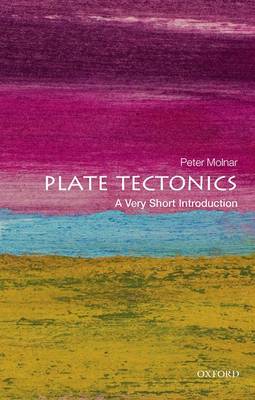
Аннотация: Plate Tectonics
| Автор/составитель | Molnar Peter |
| Серия | A Very Short Introduction |
| Год выпуска | 2015 |
| ISBN | 978-0-19-872826-9 |
| Обложка | мягкая обложка |
| Дата выпуска | 2015 г. |
| Количество томов | 1 |
| Количество страниц | 160 |
| Переплет | мягкий |
| Размеры | 174x114x8 мм |
| Страна изготовления | Великобритания |
| Вес | 180 |
The 1960s revealed a new and revolutionary idea in geological thought: that the continents drift with respect to one another. After having been dismissed for decades as absurd, the concept gradually became part of geology's basic principles. We now know that the Earth's crust and upper mantle consist of a small number of rigid plates that move, and there are significant boundaries between pairs of plates, usually known as earthquake belts. Plate tectonics now explains much of the structure and phenomena we see today: how oceans form, widen, and disappear; why earthquakes and volcanoes are found in distinct zones which follow plate boundaries; how the great mountain ranges of the world were built. The impact of plate tectonics is studied closely as these processes continue: the Himalaya continues to grow, the Atlantic is widening, and new oceans are forming. In this Very Short Introduction Peter Molnar provides a succinct and authoritative account of the nature and mechanisms of plate tectonics and its impact on our understanding of Earth. ABOUT THE SERIES: The Very Short Introductions series from Oxford University Press contains hundreds of titles in almost every subject area. These pocket-sized books are the perfect way to get ahead in a new subject quickly. Our expert authors combine facts, analysis, perspective, new ideas, and enthusiasm to make interesting and challenging topics highly readable.
Бесплатная Доставка по Европе (EU)*
*Для заказов свыше 40,- евро Подробнее
Plate Tectonics
- Модель: MYSH2271671
- ISBN 978-0-19-872826-9
-
Наличие:
Нет в наличии
